
What Are Cosmetic Ingredient Restrictions and Why Are They Changing?
Cosmetic ingredient restrictions are no longer based only on toxicological safety. They now reflect science, environmental impact, ethics, and consumer perception.
Some ingredients are restricted due to proven risks, others due to sustainability or social expectations. This shift is reshaping cosmetic formulation toward safer and more innovative solutions.
This article explores how cosmetic ingredient restrictions are evolving beyond traditional safety considerations. It looks at how science, environmental concerns, ethics, and consumer perception all influence whether an ingredient is used, limited, or replaced, showing how cosmetic safety has become a broader and more dynamic concept.
A Changing Industry: The New Meaning of ‘Safe Ingredient’
In recent years, the concept of cosmetic safety has undergone a profound transformation. For decades, ingredient evaluation was based almost exclusively on toxicological parameters such as exposure, margin of safety, impurities, stability and chemical reactivity. Today, however, the conversation around cosmetic ingredients has become far more complex and nuanced.
Alongside scientific evidence, new ethical considerations, market pressures, clean beauty trends, sustainability frameworks and growing consumer expectations around transparency all play a significant role.
This shift has given rise to a new generation of restrictions. Some are grounded in robust and well-documented toxicological assessments, while others are influenced more by social dynamics than by demonstrable risk.
Increasingly, ingredients are being reassessed not only for their effects on human health, but also for their environmental impact and their alignment with evolving ethical standards.
As a result, the cosmetics landscape is now shaped by a clear and consistent theme: safety is no longer a single, fixed concept, but the outcome of an ongoing interaction between health, ethics, sustainability and public perception.
From preservatives to talc, and from glitter to volatile substances, a wide range of ingredients now sits at the centre of debates that extend far beyond traditional toxicology.
Ingredients of Animal Origin: Ethics and Social Acceptability As New Safety Criteria
One area in which restrictions do not stem from toxicological considerations, but rather from cultural and value-driven shifts, concerns ingredients of animal origin.
The cosmetics industry has a long tradition of using substances such as lanolin derived from wool, beeswax, animal collagen, silk proteins, and carmine extracted from insects. For many decades, these ingredients have been appreciated for their functional and sensory properties.
Their gradual reduction in formulations is not driven by consumer safety concerns, as most of them have an excellent safety profile, but by a broader ethical and cultural shift.
The growing interest in vegan and cruelty-free products, alongside increasing attention to animal welfare, has significantly altered how these ingredients are perceived.
As a result, their social acceptability has diminished, and in many markets they now represent more of a marketing limitation than a value-added feature.
This illustrates how an ingredient can become “restrictive” not because it presents a risk, but because it no longer aligns with contemporary cultural expectations.
In many cases, cosmetic research has responded by developing effective alternatives of plant-based or biotechnological origin, turning this ethical demand into a driver of innovation.
Preservatives: Between Microbiological Necessity, Public Mistrust and New Formulation Solutions
Discussions around preservatives occupy a central place in the debate on restricted or controversial cosmetic ingredients.
Unlike ingredients of animal origin, their safety assessment involves a delicate and scientifically complex balance: a poorly preserved cosmetic product can become a genuine risk to consumer health.
Despite this fundamental principle, many preservatives have been placed under media scrutiny. Parabens, phenoxyethanol and other antimicrobial systems have been the subject of controversy, often leading to distorted perceptions.
The rise of “paraben-free” products, driven more by market dynamics than by robust risk evidence, has encouraged the industry to turn towards alternative preservation systems, which are not always better understood, safer, or more effective.
In parallel, the industry has explored new approaches to reduce or optimise the use of traditional preservatives.
The trend towards waterless cosmetics is a clear example: removing water from formulations significantly reduces microbiological risk and, consequently, the need for preservatives.
Similarly, the emergence of “fermented beauty”, which incorporates post-biotic or fermented ingredients, has opened up new possibilities for product stability.
At the same time, the focus on the skin microbiome has encouraged the development of gentler preservation systems designed to maintain microbial balance without disrupting the skin flora.
The case of preservatives clearly illustrates that restrictions are not defined solely by the intrinsic hazard of a substance, but also by the interaction between science, perception and innovation.
In many cases, research does not evolve purely in response to risk, but also as a response to market expectations and evolving consumer beliefs.
Cosmetic Talc: A Long History Between Scientific Scrutiny and Transparency Expectations
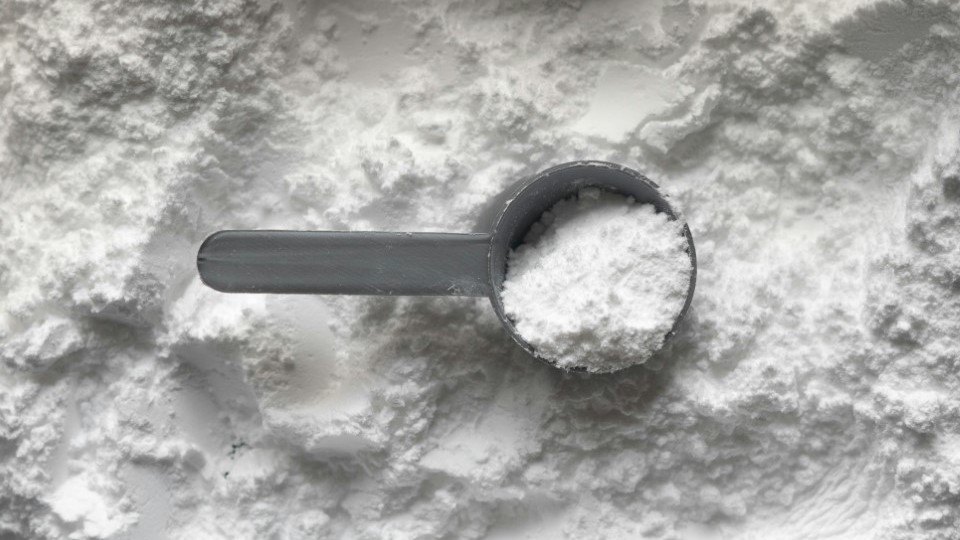
Talc is one of the oldest and most established ingredients in cosmetics, but also one of the most controversial in recent years. Its reputation has been affected by concerns over possible contamination with asbestos fibres, due to the geological proximity of natural deposits.
Although modern quality standards require stringent controls to ensure the absence of such contaminants, public perception has been shaped by legal cases and high-profile media coverage.
Here, the central theme of this discussion becomes clear: the evolution of cosmetic safety also involves the redefinition of the technical requirements applied to an ingredient.
Talc has not been banned, but its conditions of use have been progressively tightened and more closely regulated. Scientific assessments do not indicate intrinsic hazards associated with pure talc, but rather highlight the importance of continuously verifying raw material quality to prevent indirect risks.
The case of talc illustrates that cosmetic safety is not static. It is a dynamic process that evolves with scientific progress and with increasingly stringent control and transparency requirements.
Glitter and Microplastics: Sustainability As a New Safety Parameter
Another important area of restriction concerns glitter and, more broadly, microplastics. In this case, the discussion shifts from risk to the consumer to risk to the environment.
Traditional glitter, typically composed of metallised plastic films, is highly persistent and represents a form of pollution that is difficult to control. Its dispersion in aquatic ecosystems has led to increasing regulatory pressure in Europe and other regions worldwide.
This category of ingredients illustrates how cosmetics are redefining the boundaries of safety: today, an ingredient may be restricted even if it poses no direct risk to human health, but is considered problematic from an environmental perspective.
This marks a profound cultural shift, in which sustainability is increasingly treated as a safety criterion alongside traditional toxicological assessment.
The industry has responded with a wave of innovation, including cellulose-based biodegradable glitter, mineral alternatives such as synthetic mica, and water-soluble or compostable polymers.
These technically advanced solutions demonstrate how regulatory or market restrictions, when clearly defined, can become a catalyst for formulation innovation.
Formaldehyde and Formaldehyde Donors: When Perception and Real Risk Coincide
The discussion around formaldehyde is one of the clearest examples of a substance that presents a genuine risk to consumers. Unlike other categories, where restrictions are driven by perception or sustainability concerns, the toxicological evidence in this case is well established.
Formaldehyde is a recognised sensitiser and carcinogen, and its direct use in cosmetics has been prohibited for many years.
However, additional complexity arises with formaldehyde-releasing substances, often referred to as formaldehyde donors, which have historically been used as preservatives. These molecules release very small amounts of formaldehyde to provide antimicrobial protection.
Despite regulatory restrictions and ongoing review by the authorities, growing awareness and increasing consumer concern have led to their gradual phase-out across much of the market.
This case illustrates how regulatory decisions and consumer perception can align when the underlying risk is clearly identified and well documented. It represents an example of a necessary restriction, grounded in evidence rather than driven solely by social or market dynamics.
Volatile Organic Compounds (VOCs): Between Air Quality and Product Innovation
Volatile Organic Compounds (VOCs) represent another category of ingredients in which the concept of “safety” takes on multiple dimensions.
These substances are responsible for the rapid evaporation of products and are widely used in perfumes, hair sprays, nail polishes and various aerosol formulations.
Restrictions on VOCs have emerged primarily from the need to improve air quality and reduce environmental impact, particularly in relation to the formation of ground-level ozone.
This category provides a useful link between the themes discussed so far. Like glitter, VOCs raise environmental concerns; like preservatives, they are often essential to ensure product performance; and, like animal-derived ingredients, they are also influenced by market expectations and evolving consumer attitudes.
Their restriction has driven significant research into alternative solutions, including low-volatility solvents, more efficient film-forming polymers, safer propellant systems and aerosol-free formulations.
The management of VOCs demonstrates that modern cosmetics must reconcile technical needs, public health, sustainability and consumer desires, reformulating well-established products without compromising their effectiveness.
Conclusions: A New Definition of Cosmetic Safety
The analysis of the different categories of ingredients clearly shows that contemporary cosmetics operates within a far more complex framework than in the past.
Safety is no longer defined solely by the absence of harmful effects, but also by an ingredient’s ability to align with ethical expectations, sustainability goals and social acceptability.
Restrictions—whether they stem from scientific evidence, cultural pressures or environmental considerations—should not be interpreted as limits to cosmetic creativity, but rather as opportunities to develop products that are more responsible, more innovative and more respectful of both consumers and the planet.
The leitmotif running through all these topics is clear: cosmetics is redefining its relationship with ingredients, transforming every challenge into an opportunity for evolution.
It is precisely in this continuous transformation that the sector finds its strength, demonstrating that safety is not a fixed endpoint, but a dynamic process that evolves with science, society and the world we live in.
If you have any doubts about how the regulatory landscape may evolve in the coming years, or if you are concerned about staying up to date with new developments, contact us and we will be happy to help you keep your products compliant across all relevant destination markets.
Key Takeaways: Cosmetic Ingredient Restrictions
- Cosmetic ingredient safety now includes ethics, sustainability, and consumer perception, not only toxicology
- Restrictions in cosmetics are driven by science, cultural expectations, and environmental impact
- Animal-derived cosmetic ingredients are declining due to vegan and cruelty-free ethics, not safety concerns
- Cosmetic preservatives remain essential for microbiological safety despite ongoing consumer mistrust
- Cosmetic talc highlights the importance of regulatory oversight and raw material quality control
- Microplastics and glitter in cosmetics are increasingly restricted due to environmental persistence and pollution concerns
- Formaldehyde in cosmetics represents a restriction based on well-established toxicological risk
- VOCs in cosmetics are regulated to improve air quality while maintaining product performance
- Cosmetic restrictions are driving innovation in formulation technologies and alternative ingredients
FAQs: Cosmetic Ingredient Restrictions and Safety
What does “cosmetic ingredient restriction” mean?
It refers to limitations placed on cosmetic ingredients due to safety data, environmental impact, or changes in consumer expectations and regulatory standards.
Are all cosmetic ingredient restrictions based on safety risks?
No. Some restrictions are based on proven toxicological risks, while others are driven by environmental concerns, ethical values, or social perception.
Why are animal-derived ingredients restricted in cosmetics?
They are not restricted due to safety issues, but because of changing ethical standards, including increased demand for vegan and cruelty-free cosmetics.
Why are preservatives still used in cosmetics despite negative perception?
Preservatives are essential in cosmetics to prevent microbial contamination and ensure product safety, even if some have faced consumer mistrust.
Why is talc controversial in cosmetics?
Cosmetic talc is controversial due to concerns about possible contamination, leading to stricter regulatory controls and increased transparency requirements.
Why are microplastics and glitter restricted in cosmetics?
They are restricted mainly due to environmental concerns, particularly their persistence and impact on ecosystems, rather than human health risks.
Is formaldehyde banned in cosmetics?
Yes, the direct use of formaldehyde in cosmetics is prohibited due to well-established toxicological risks. Formaldehyde-releasing preservatives have also been progressively phased out.
What are VOCs in cosmetics and why are they regulated?
Volatile Organic Compounds are used in products like sprays and perfumes. They are regulated to reduce air pollution and improve air quality.
Do cosmetic restrictions affect innovation?
Yes. Restrictions often drive innovation by encouraging the development of safer, more sustainable, and more advanced formulation alternatives.
How is cosmetic safety defined today?
Cosmetic safety is now a dynamic concept that includes toxicology, environmental impact, ethical considerations, and consumer perception.