What Are Sunsticks and Suncushions Under EU Cosmetic Regulation?
Sunsticks and suncushions are sun care products in solid, semi-solid or cushion formats that are regulated as cosmetic products in the European Union under Regulation (EC) No. 1223/2009.
They must be safe for human health, assessed by a qualified safety assessor, supported by a Product Information File (PIF) and notified via the CPNP before being placed on the market.
In recent years, the sunscreen market has undergone significant change, not only in terms of ingredients and UV filters, but also in formats and application methods.
Sunsticks and suncushions are part of this evolution, developed to respond to consumer needs such as portability, frequent reapplication and ease of use throughout the day.
This article explores these two sun care formats, focusing on their formulation characteristics, classification under EU cosmetic legislation, key requirements for testing and labelling, the rules governing sun protection claims, and regulatory differences, particularly with the United States market.
Sunsticks and Suncushions: What They Are and Why They Are Gaining Popularity
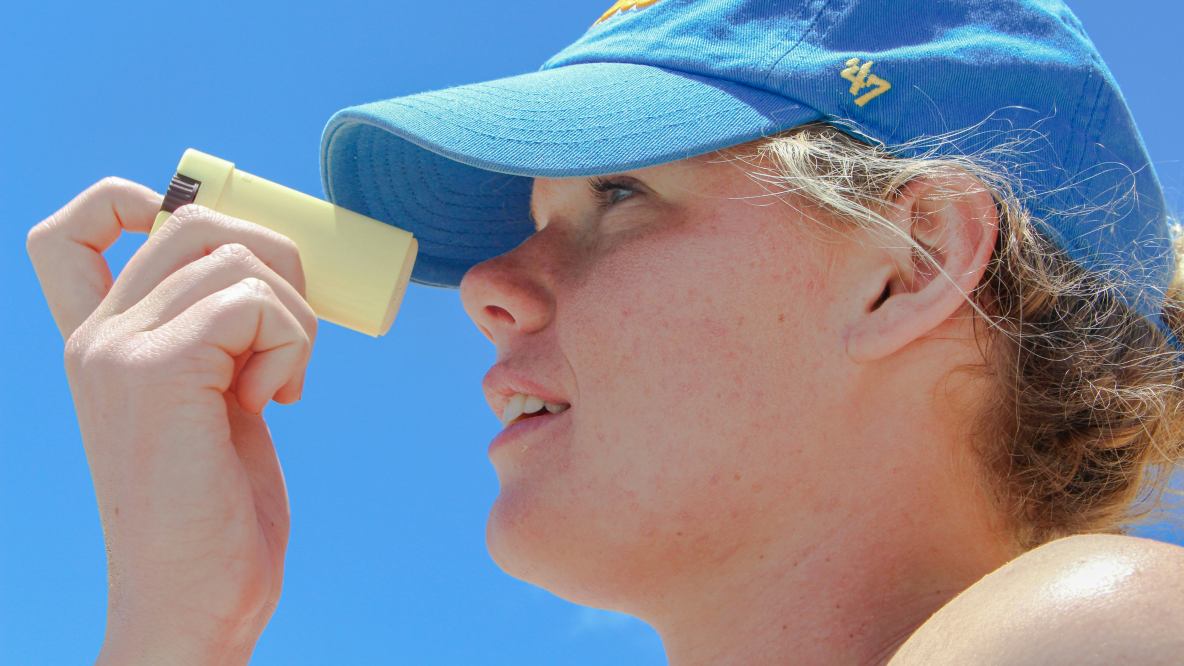
Sunsticks are sun care products in a solid or semi-solid format, packaged in retractable sticks that allow direct application to the skin without using the hands.
They were originally developed as sunscreens for sensitive areas such as the lips, eye contour, nose and cheekbones, but they are now increasingly available as full-face products, particularly within the premium and dermocosmetic segments.
Suncushions, by contrast, originate from the world of K-beauty and are based on the concept of cushion foundations. A fluid or emulsion is absorbed into an internal sponge, from which the product is applied using a dedicated applicator.
In sunscreen formats, the cushion design enables an even, buildable application, often combined with a lightweight feel and a refined cosmetic finish.
The growth of these products is linked to several factors:
- Greater awareness of the importance of reapplying sunscreen
- More urban and fast-paced lifestyles
- The integration of sun protection into daily skincare and make-up routines
EU Regulation of Sunsticks and Suncushions
In the European Union, sunsticks and suncushions are classified as cosmetic products and are regulated under Regulation (EC) No. 1223/2009.
Their primary function is to protect the skin from UV rays, meaning they fall within the definition of a cosmetic product with a protective function.
Like all cosmetics, they must:
- Be safe for human health
- Be assessed by a qualified safety assessor
- Have a complete Product Information File (PIF)
- Be notified via the CPNP before being placed on the market
However, the specific nature of sunscreens requires additional attention, as they provide a measurable protective function directly linked to consumer safety.
For this reason, the European Commission has issued specific recommendations and guidelines for sunscreen products, which complement the general regulatory framework.
Typical Ingredients and Formulation Choices

Sunstick and Suncushion Ingredients and Formulation
From a formulation perspective, sunsticks and suncushions have several distinct characteristics compared with traditional sunscreens.
UV filters
The UV filters used must be those listed in Annex VI of Regulation (EC) No. 1223/2009, in compliance with the maximum authorised concentrations. In sunsticks, it is common to use:
- Highly stable organic filters
- Combinations of UVA and UVB filters to ensure broad-spectrum protection
- Physical filters such as titanium dioxide or zinc oxide, particularly in products designed for sensitive skin
Formulation Base
In sunsticks, the base is typically anhydrous or contains very little water, using waxes, butters and structuring agents to ensure stability, smooth application and heat resistance.
In suncushions, by contrast, lighter emulsions are preferred, often enriched with:
- Humectants
- Soothing active ingredients
- Skincare-focused ingredients to enhance skin comfort
These formulation choices influence not only the level of protection, but also how the product feels on the skin and how well it works alongside make-up.
Packaging for Sunsticks and Suncushions: Function, Hygiene and Sustainability
Packaging is one of the key factors behind the success of these products. Sunsticks use compact containers designed to:
- Avoid direct contact with the fingers
- Protect the product from contamination
- Enable precise application, even on the go
Suncushions, by contrast, must ensure:
- Compatibility between the packaging material and the formulation
- Microbiological control, particularly for water-based products
- Ease of use without product waste
In recent years, there has also been a growing focus on sustainability, with the introduction of recyclable materials, refill systems and mono-material packaging, while still meeting safety and stability requirements.
Sunscreen Testing and ISO Standards for Sunsticks and Suncushions
Sunscreen products, including sunsticks and suncushions, must support their protection claims with standardised testing, typically based on internationally recognised ISO standards. For more details about standardised testing in Europe, read our article about sunscreen products regulations.
The key standards include:
- ISO 24444: determination of in vivo SPF value
- ISO 24443: assessment of UVA protection
- ISO 16217 and ISO 18861: water resistance, where claimed
These tests are essential not only to demonstrate product effectiveness, but also to ensure the accuracy of the information provided to consumers.
The results are included in the Product Information File (PIF) and are assessed by the safety assessor as part of the overall safety evaluation.
Sunscreen Claims and Communication Requirements In the EU
Sun protection claims are one of the most sensitive areas from a regulatory perspective. In the EU, the common criteria for cosmetic claims set out in Regulation (EU) No. 655/2013 apply, requiring that all claims are:
- Supported by evidence
- Truthful
- Not misleading
- Clear and understandable for the average consumer
For sunscreen products, this means that:
- The SPF value must be expressed according to standardised categories
- UVA claims must comply with specific ratios between UVA and UVB protection
- Terms such as “sunblock” or “full protection” are not permitted
The European Commission’s interpretative guidelines and specific recommendations on sunscreens provide practical direction on how to communicate protection correctly, including appropriate usage instructions and the need for reapplication.
Labelling Requirements for Sunsticks and Suncushions
The labelling of sunsticks and suncushions must comply with Article 19 of Regulation (EC) No. 1223/2009, supplemented by specific recommendations for sunscreen products.
The label must clearly include:
- Product function
- SPF protection level
- Instructions for use
- Relevant warnings
- List of ingredients (INCI)
Clear labelling is particularly important to prevent misuse, especially as these formats may lead consumers to underestimate the amount of product required for adequate protection.
Differences With the US Market: Cosmetics vs OTC Products
A key consideration, particularly for international brands, is the difference between the EU and US regulatory frameworks.
In the United States, sunscreen products are not classified as cosmetics but as over-the-counter (OTC) drugs regulated by the FDA.
This results in significant differences:
- Only certain UV filters are permitted
- Formulations must comply with the Sunscreen Monograph
- Labelling must follow the Drug Facts format
- Claims are subject to stricter control
As a result, a sunstick or suncushion compliant with EU requirements is not automatically eligible for sale in the US, making a tailored regulatory strategy essential.
Sunsticks and suncushions represent one of the most interesting developments in the sun care category, combining format innovation, lifestyle needs and regulatory rigour.
Their management requires solid regulatory expertise, from ingredient selection and ISO testing to communication and labelling, as well as consideration of differences between major international markets.
For professionals in the cosmetics sector, these products are a clear example of how regulatory compliance must evolve alongside innovation.
Do you have concerns about how the regulatory landscape may change in the coming years? Are you worried about new developments in this area and staying up to date with ongoing changes?
Contact us and we will be happy to help you keep your products compliant across all relevant destination markets.
Key Takeaways: Sunsticks and Suncushions EU Regulations
- Sunsticks and suncushions are sun care formats designed for easy, on-the-go application
- In the EU, they are regulated as cosmetic products under Regulation (EC) No. 1223/2009
- They require safety assessment, a PIF and CPNP notification
- UV filters must comply with Annex VI and authorised concentration limits
- Claims, testing and labelling are strictly controlled under EU cosmetic rules
- Packaging focuses on hygiene, usability and increasing sustainability
- The US regulates sunscreens as OTC drugs, creating key regulatory differences
FAQ Sunsticks and Suncushions EU Regulations
What are sunsticks and suncushions under EU cosmetic regulation?
They are cosmetic sun care products in solid, semi-solid or cushion formats regulated under Regulation (EC) No. 1223/2009 in the EU.
What EU regulatory requirements apply to sunstick and suncushion brands?
Brands must ensure product safety, complete a safety assessment, compile a PIF and notify the product via the CPNP before placing it on the market.
Which UV filters can be used in sunsticks and suncushions in the EU?
Only UV filters listed in Annex VI of Regulation (EC) No. 1223/2009 are permitted, within authorised concentration limits.
What ISO sunscreen testing standards apply to sunsticks and suncushions?
Brands commonly use ISO 24444 for SPF, ISO 24443 for UVA protection and ISO 16217/18861 for water resistance where relevant.
What labelling requirements apply to sunstick and suncushion products?
Labelling must comply with Article 19 of Regulation (EC) No. 1223/2009, including SPF level, usage instructions, warnings and INCI list.
What are the EU rules for sunscreen claims on sunsticks and suncushions?
Claims must be supported, not misleading, and avoid terms such as “sunblock” or “full protection”.
What is the difference between EU and US regulations for sunscreen brands?
In the EU, sunscreens are cosmetics, while in the US, they are regulated as OTC drugs, requiring different formulation, labelling and compliance approaches.