What do GLP-1 agonists mean for the cosmetics industry?
GLP-1 treatments and significant weight loss can affect facial volume, skin laxity, body appearance and hair, creating opportunities for new cosmetic products and personalised cosmetic protocols. However, brands must distinguish cosmetic benefits from pharmacological effects, carefully assess the use of GLP-1 and other peptides, substantiate claims and ensure compliance with EU cosmetics regulations.
The emergence of GLP-1 receptor agonists has profoundly changed the landscape of body weight management. Drugs such as semaglutide, liraglutide and other agonists of the incretin pathways are now associated not only with weight loss, but also with a broader transformation of body image and aesthetic needs of consumers.
For the cosmetics sector, the phenomenon is particularly interesting. Significant and relatively rapid weight loss can be accompanied by visible changes in the distribution of adipose tissue, skin tone, facial appearance and, in some individuals, hair growth. This creates a new demand: no longer just “anti-ageing” products, but cosmetics intended to support the appearance of the skin during and after significant weight loss.
This scenario opens up interesting business opportunities, but also important regulatory questions. A cosmetic can certainly help improve the appearance of the skin, hydration, elasticity and the perception of firmness. On the other hand, it cannot be transformed, through marketing, into a “topical GLP-1”, into a pharmacological treatment or into a product intended to correct the physiological effects of a drug.
What happens to the skin during significant weight loss?
The so-called “Ozempic face” is probably the expression that has contributed most to popularising the phenomenon. The term does not identify a medical diagnosis, but describes aesthetic changes observable in some people after marked weight loss: reduction in facial volume, greater evidence of wrinkles and furrows, loss of fullness in the mid-facial region and increased skin laxity.
The most immediate explanation is the reduction of subcutaneous adipose tissue. The face is not only made up of skin and muscle: it has several superficial and deep fat compartments that contribute to its volume and structure. When fat volume decreases rapidly, the skin has to adapt to a new configuration of the underlying tissues.
A recent review dedicated to facial modifications associated with GLP-1-induced weight loss has highlighted the involvement of different anatomical levels, from the loss of volume in fat compartments to changes in soft tissue support and increased skin laxity.
However, it is important to avoid simplification: not everything attributed to GLP-1 is necessarily a direct pharmacological effect on the skin.
A significant part of these aesthetic changes can be explained by the speed and extent of weight loss, regardless of the pharmacological mechanism used to achieve it. This is also particularly important from the point of view of cosmetic communication.
The most recent literature is in fact trying to distinguish the effects directly associated with GLP-1 agonists from those resulting from the reduction of adipose tissue, nutritional changes and the physiological state that accompanies significant weight loss. Cellular mechanisms involving fibroblasts, dermal adipose tissue and adipose stem cells have also been hypothesised, but many of these hypotheses are still being studied.
How does significant weight loss affect skin elasticity and appearance?
One of the most interesting aspects for the cosmetics industry concerns the quality of the skin.
Significant weight loss may be associated with increased laxity, changes in elasticity and accentuation of wrinkles. A systematic review published in 2026 collected the available evidence on the dermatological effects of GLP-1 agonists, highlighting, among other aspects, loss of facial volume, changes in skin morphology and reduced elasticity.
The picture is particularly interesting because it coincides with some of the traditional areas of cosmetology: hydration, barrier function, elasticity, wrinkles, texture and the overall appearance of the skin.
This gives rise to a potential new category of products: skincare designed for people who are going through or have just completed a period of significant weight loss.
In terms of formulation, there is no need to develop a completely new product. Many of the needs can be addressed through already established cosmetic technologies: moisturising systems, film-forming, functional ingredients intended to improve the appearance of the skin, substances with antioxidant activity and ingredients used in anti-ageing products.
The real novelty could therefore lie above all in the positioning of the product and in the brand’s ability to respond to a specific consumer need.
How can GLP-1 treatments affect hair loss and cosmetic demand?
Another area of interest concerns hair. Hair loss is frequently reported by people who experience significant weight loss. However, even in this case it is necessary to distinguish between the direct effect of the drug and the indirect consequences of weight loss.
A systematic review published in 2026 specifically analysed the relationship between GLP-1 therapies and hair loss. The available literature suggests an association that deserves attention, but the picture must also be interpreted by considering factors such as weight loss, nutritional intake and physiological stress.
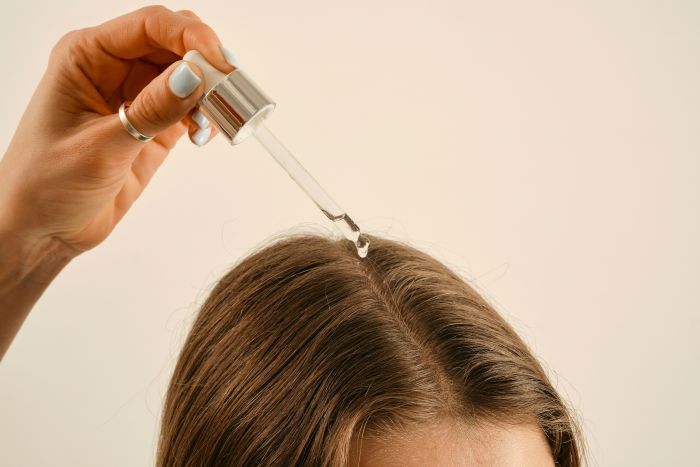
From a cosmetic point of view, this can translate into a greater demand for products intended for scalp care and to improve the appearance of the hair.
However, it is precisely in this sector that the regulatory boundary becomes particularly important. A cosmetic product can be intended, for example, to cleanse the scalp, condition the hair, improve its appearance, make it fuller or help keep it in good condition. The transition from these goals to a statement such as “prevents hair loss caused by GLP-1” or, even more explicitly, “stimulates hair regrowth after GLP-1 therapy” requires a careful evaluation of the nature of the claim and its possible interpretation.
The problem is not just the presence of a certain ingredient in the formula. It is the overall message conveyed to the consumer.
Can cosmetics be marketed as GLP-1 skincare or topical GLP-1 treatments?
The market may be tempted to develop a new category of ingredients associated with GLP-1, using terms such as “GLP-1 skincare”, “GLP-1 facial”, “GLP-1 topical” and “GLP-1 booster”. However, from a European regulatory point of view, the use of such terminology requires extreme caution.
Regulation (EC) No. 1223/2009 defines a cosmetic product on the basis of its intended use and cosmetic functions, such as cleansing, perfuming, changing the appearance, protecting or maintaining the external surfaces of the body in good condition. A cosmetic, therefore, can be formulated to improve the appearance of the skin of a person who has lost weight, but this does not mean that it can exert a systemic pharmacological action similar to that of a GLP-1 agonist.
The problem becomes even more evident when it comes to ingredients. A cosmetic product may contain a peptide or other cosmetic ingredient with a cosmetically appropriate function. However, it is not correct to use the language of medicinal products to attribute metabolic or pharmacological activity to it simply because the product is intended for consumers who take GLP-1. In other words, “skincare for post-weight-loss skin” can be a cosmetic concept; “topical GLP-1 treatment” is something else.
The classification must always be assessed on a case-by-case basis when the product has characteristics or claims that may bring it closer to other regulatory areas. The European Commission expressly recognises the existence of borderline products and emphasises that the classification must be carried out on the basis of the specific characteristics of the product.
Cosmetic claims for GLP-1-related products: what are the regulatory risks?
Regulation (EU) No. 655/2013 establishes the common criteria for the justification of cosmetic claims. These include legality, truthfulness, evidential support, honesty, fairness and the possibility of informed consumer choice.
This means that a brand that develops a product specifically aimed at the audience that uses GLP-1 must consider not only the formula, but also the entire communication system:
- packaging;
- website;
- advertising;
- social media;
- influencer marketing;
- before-and-after images;
- material intended for professionals;
- name of the product;
- description of ingredients.
The greatest risk arises when the context suggests an effect or activity that the cosmetic cannot legitimately claim.
For example, there is a substantial difference between:
“Helps improve the appearance of skin firmness after weight loss”
and:
“Reverses GLP-1-induced skin ageing”.
In the first case, the focus is on the cosmetic aspect of the skin. In the second, a causal relationship with a pathophysiological phenomenon is introduced and an ability to address its underlying cause is implicitly suggested. The difference may seem purely linguistic, but from a regulatory point of view it is not.
The principle of evidentiary support requires that claims are supported by adequate and verifiable evidence and that the level of evidence is proportionate to the nature of the claim. Furthermore, the demonstrated effect on an ingredient cannot be automatically transferred to the finished product without adequate support.
Why should cosmetic brands avoid medicalised claims about GLP-1 treatments?
The same caution should be adopted with terms such as:
- “treats Ozempic face”;
- “repairs GLP-1 damage”;
- “reverses facial fat loss”;
- “prevents GLP-1-related hair loss”;
- “stimulates collagen damaged by GLP-1”;
- “restores subcutaneous fat”;
- “counteracts GLP-1 side effects”.
The problem is not only to prove that the product has a cosmetic effect. It is also to demonstrate that the claimed effect actually corresponds to what the consumer understands from the claim.
A cosmetic product can improve the appearance of the skin, but it should not be presented as a therapy for a pharmacological side effect. This becomes particularly important when the product is directly associated with an identifiable medicinal product.
Can GLP-1 and other peptides be used as cosmetic ingredients?
Here the problem becomes even more complex. The growing interest in GLP-1 has also encouraged the online proliferation of products presented as “peptides”, slimming products or even anti-ageing treatments. The French ANSM has recently drawn attention to the risks of purchasing unauthorised peptides through the internet, social networks and informal channels.
The agency has reported cases of serious adverse events, including cases requiring hospitalisation, and highlighted uncertainty about the composition of these products. These also include products presented as retatrutide and other peptides. The situation was further updated in summer 2026 with health measures against products sold online and presented as GLP-1 agonists.
For the cosmetics sector, the message is clear: the popularity of a molecule does not automatically make every product that contains it a cosmetic product. A biologically active peptide, especially if it is intended to produce a pharmacological effect, cannot be “reclassified” as a cosmetic ingredient simply by including it in a cream or serum.
Before even discussing claims, it is therefore necessary to verify the nature of the substance, intended use, concentration, method of administration, mechanism of action and applicable regulatory framework.

How can cosmetics respond to GLP-1-related aesthetic changes?
The GLP-1 phenomenon does not necessarily have to be seen as a regulatory threat. On the contrary, it can represent a significant opportunity for innovation. Consumer demand may shift towards products intended for specific aesthetic needs following significant weight loss:
Skin firmness. Products intended to improve the appearance of skin tone and elasticity.
Hydration and barrier support. Formulations aimed at maintaining hydration and barrier function.
Anti-ageing. Products aimed at reducing the appearance of wrinkles and lines and generally improving skin quality.
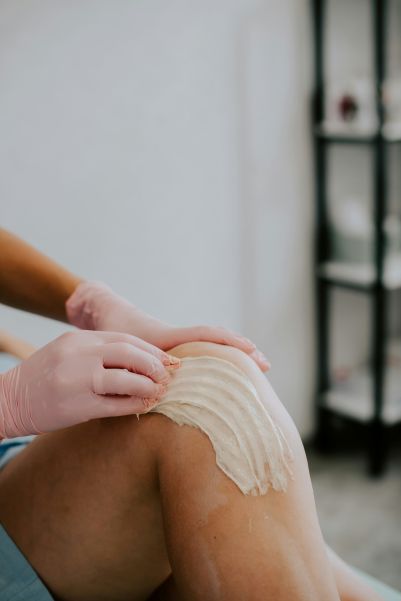
Body care. Products intended for areas of the body where loss of volume can make skin laxity more evident.
Scalp and hair care. Products intended for cosmetic care of the scalp and improvement of the appearance of the hair.
These are all areas compatible with cosmetics, as long as the formulation, intended use and claims remain within the scope provided for by the legislation.
The most recent research also suggests that topical skincare could play a complementary role in the management of aesthetic issues associated with weight loss, particularly with regard to skin quality and laxity. However, the available evidence mainly concerns cosmetic skin improvement and does not automatically support specific claims on GLP-1 agonists.
Why is customisation likely to drive innovation in GLP-1-related cosmetics?
The GLP-1 phenomenon highlights a broader change in the beauty market: the consumer is not necessarily looking for just an “anti-ageing” product, but a solution linked to a particular phase of their life.
This could encourage the development of personalised cosmetic protocols: skin routines during weight loss, products to maintain firmness, cosmetic body treatments and specific programmes for scalp care.
For brands, the challenge will be to transform an emerging need into a scientifically credible proposal without appropriating medical language.
The difference between an innovative cosmetic product and a regulatory problematic product could, again, be very subtle: not necessarily in the formula, but in the way that formula is described.
Conclusion: GLP-1 agonists and the future of cosmetic innovation
GLP-1 agonists are helping to create a new intersection between medicine, dermatology, aesthetics, and cosmetics. Significant weight loss can change facial volume, skin laxity, body appearance, and, in some individuals, hair cycle. The most recent scientific publications are beginning to outline these phenomena, although several biological mechanisms have yet to be elucidated.
For the cosmetics industry, this means that there is real space for new products and new concepts. But the answer should not be to simply create a “GLP-1-based” cosmetic.
The most solid path is to develop scientifically supported products for concrete cosmetic needs: hydration, elasticity, firmness, skin quality, wrinkle appearance and hair care. The claims made for these products should reflect these cosmetic benefits and comply with Regulation (EC) No. 1223/2009 and the criteria of Regulation (EU) No. 655/2013.
In a market where the boundary between beauty and health is becoming increasingly thin, regulatory compliance is not a limit to innovation: it is what allows you to transform a medical trend into a truly sustainable and credible cosmetic opportunity.
Key takeaways: GLP-1 agonists and cosmetic regulations
- GLP-1 treatments and significant weight loss can affect facial volume, skin laxity, body appearance and hair.
- Cosmetic opportunities include products targeting skin firmness, hydration, elasticity, skin quality and hair care.
- Cosmetic ingredients, including peptides, must not be presented as having pharmacological effects without appropriate regulatory classification.
- Claims must be supported by evidence and reflect the cosmetic effects consumers understand from them.
- Personalised cosmetic protocols can address specific needs during and after weight loss.
- Compliance with EU cosmetics regulations is essential when developing products and communicating their benefits.