
How Does Regulation (EU) 2025/40 Affect UK and Northern Ireland Packaging Compliance?
The PPWR introduces new EU packaging requirements covering recyclability, recycled content, and sustainability obligations.
Under the Windsor Framework, these rules will continue to apply in Northern Ireland, creating additional compliance considerations for businesses operating across Great Britain, Northern Ireland, and the EU.
The adoption of Regulation (EU) 2025/40 represents one of the most significant developments in European environmental legislation in recent years.
The Regulation on packaging and packaging waste, commonly referred to as the Packaging and Packaging Waste Regulation (PPWR), replaces the former Packaging and Packaging Waste Directive 94/62/EC and establishes a harmonised framework governing the entire lifecycle of packaging within the European Union.
Its objectives include reducing the generation of packaging waste, promoting recyclability, increasing reuse systems, and supporting the transition to a circular economy.
The Regulation has particular importance for the United Kingdom in relation to Northern Ireland because of the legal framework established under the Windsor Framework and the Protocol on Ireland/Northern Ireland.
Although the United Kingdom left the European Union, specific EU legislation concerning goods continues to apply in Northern Ireland to avoid a hard border on the island of Ireland and to preserve the integrity of the EU internal market.
The European Commission Notice concerning the application of Regulation (EU) 2025/40 in the United Kingdom in respect of Northern Ireland clarifies how the new packaging rules will operate within this unique legal and political environment.
The Notice is particularly relevant for manufacturers, importers, distributors, authorised representatives, packaging suppliers, and economic operators trading between Great Britain, Northern Ireland, and the European Union.
This article examines the structure and objectives of Regulation (EU) 2025/40, the specific implications for Northern Ireland, and the practical consequences for businesses operating across UK-EU supply chains.
Overview of Regulation (EU) 2025/40
Regulation (EU) 2025/40 entered into force on 11 February 2025 and will generally apply from the 12th of August 2026.
The Regulation introduces directly applicable rules across all Member States, replacing the previous directive-based approach that allowed national variations in implementation.
The Regulation covers all forms of packaging regardless of material type or sector, including industrial, commercial, transport, and consumer packaging. It establishes requirements concerning:
- Packaging minimisation;
- Recyclability and recycled content;
- Restrictions on hazardous substances;
- Reuse and refill systems;
- Labelling and information obligations;
- Waste prevention measures;
- Extended producer responsibility.
One of the key policy goals is to ensure that all packaging placed on the EU market becomes recyclable in an economically viable manner by 2030.
The Regulation also establishes progressive targets for reducing packaging waste and increasing the use of recycled materials, particularly recycled plastics.
The PPWR reflects the broader objectives of the European Green Deal and the Circular Economy Action Plan.
Packaging waste represents a major environmental concern within the EU, accounting for a substantial proportion of municipal waste and marine litter.
The Regulation therefore seeks to reduce dependency on virgin raw materials while promoting sustainable product design and waste management systems.
Unlike the previous Directive 94/62/EC, the PPWR is directly applicable without the need for national transposition, thereby reducing fragmentation among Member States and creating greater legal certainty for economic operators.
How Does the PPWR Apply In Northern Ireland After Brexit?
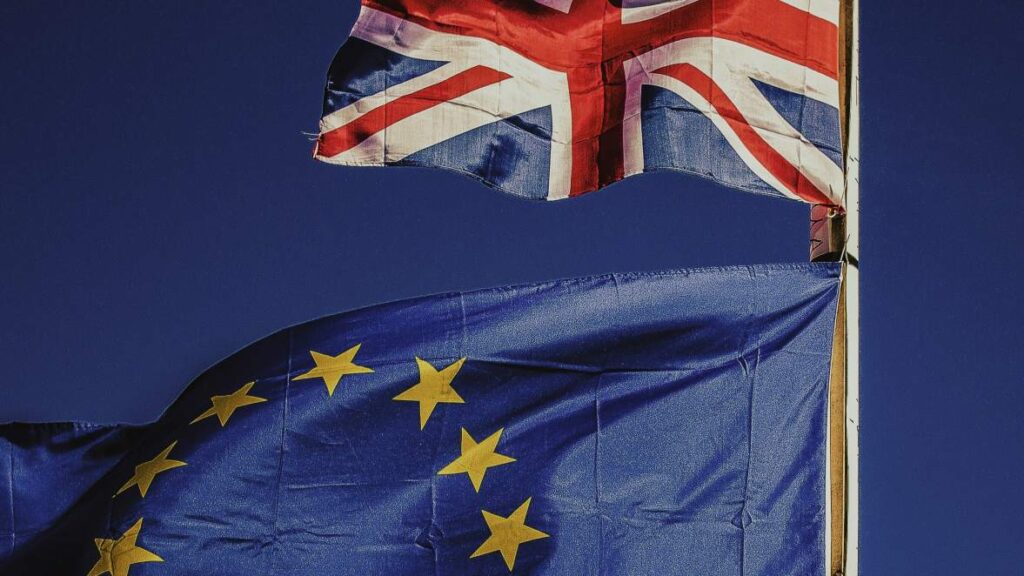
The legal position of Northern Ireland following Brexit remains unique. Under the Protocol on Ireland/Northern Ireland, subsequently modified by the Windsor Framework, Northern Ireland continues to align with certain EU rules concerning goods.
This arrangement was designed to avoid physical border controls between Northern Ireland and the Republic of Ireland while protecting the EU single market. As a result, many EU product regulations continue to apply in Northern Ireland even though the rest of the United Kingdom is outside the EU regulatory framework.
The application of packaging legislation is particularly important because packaging is intrinsically linked to the placing of goods on the market.
Packaging compliance affects manufacturing, labelling, waste obligations, environmental claims, and market surveillance requirements.
The European Commission Notice clarifies that Regulation (EU) 2025/40 falls within the scope of EU legislation applicable under the Windsor Framework. Consequently, businesses placing packaged products on the Northern Ireland market must comply with the PPWR requirements in the same manner as operators within EU Member States.
This creates a dual regulatory environment within the United Kingdom:
- Great Britain may develop separate domestic packaging legislation;
- Northern Ireland remains aligned with the EU PPWR framework.
For companies operating across the UK internal market, this divergence creates important compliance challenges.
What Are the Market Access and Compliance Obligations Under the PPWR?
One of the central consequences of the PPWR’s application in Northern Ireland concerns market access conditions for packaged goods.
Any packaging placed on the Northern Ireland market must satisfy the requirements established under Regulation (EU) 2025/40. This includes obligations concerning packaging design, recyclability, labelling, composition, and recycled content.
Manufacturers and importers placing goods on the Northern Ireland market may therefore need to ensure that packaging used throughout UK supply chains complies with EU standards even if the same packaging is not required for Great Britain.
The Regulation also strengthens obligations relating to technical documentation and conformity assessment. Economic operators may be required to maintain evidence demonstrating compliance with recyclability requirements, recycled content calculations, and substance restrictions.
The Commission Notice further emphasises the role of market surveillance authorities under Regulation (EU) 2019/1020, which was amended by the PPWR. Market surveillance authorities in Northern Ireland will therefore operate within the EU product compliance framework.
Economic operators based in Great Britain supplying packaged goods into Northern Ireland may effectively be treated as third-country operators for certain regulatory purposes. This can trigger additional obligations concerning importers, authorised representatives, and documentation retention.
What Are the Packaging Sustainability Requirements Under the PPWR?
The PPWR introduces ambitious sustainability obligations that significantly affect packaging manufacturers and product suppliers.
One of the most important elements concerns recyclability. Packaging must be designed for recycling according to harmonised EU criteria.
Packaging that fails to meet recyclability thresholds may ultimately be prohibited from being placed on the market.
The Regulation also establishes mandatory recycled content targets for plastic packaging. These requirements aim to stimulate demand for secondary raw materials and support the EU recycling industry.
Additional restrictions apply to certain single-use packaging formats, particularly where reusable alternatives are feasible.
The Regulation also promotes refill systems and reusable packaging models across various sectors, including food service and transport packaging.
For businesses operating in Northern Ireland, these obligations may require substantial redesign of packaging systems, supplier qualification processes, and internal compliance procedures.
Particular attention must also be given to substances used in packaging materials. The Regulation includes restrictions concerning hazardous substances, including certain per- and polyfluoroalkyl substances (PFAS) used in food-contact packaging.
This aspect is especially relevant for industries such as cosmetics, pharmaceuticals, food packaging, and consumer goods, where complex multi-material packaging structures are widely used.
How Will the PPWR Affect UK Businesses?
The application of the PPWR to Northern Ireland creates practical challenges for UK businesses.
Companies operating throughout the United Kingdom may face the prospect of maintaining separate packaging systems:
- One compliant with Great Britain requirements;
- One compliant with EU PPWR obligations applicable in Northern Ireland.
This may increase operational complexity, particularly for small and medium-sized enterprises.
Many businesses may ultimately decide to adopt EU-compliant packaging across the entire UK market in order to simplify logistics and avoid duplication. However, this could increase costs in the short term due to redesign, testing, certification, and supplier adjustments.
Importers and distributors must also carefully assess their legal status under EU law when supplying products into Northern Ireland.
Depending on supply chain arrangements, a business may become responsible for obligations typically assigned to importers under EU legislation.
Labelling requirements may also differ. Packaging information, environmental claims, recyclability markings, and waste sorting instructions may need to comply with EU harmonised standards.
Failure to comply with the PPWR could result in market restrictions, enforcement action, product recalls, or reputational risks.
What Are the Future Regulatory Developments For the PPWR?

The implementation of the PPWR in Northern Ireland highlights the continuing complexity of post-Brexit regulatory relations between the EU and the United Kingdom.
Environmental regulation is becoming an increasingly important area of divergence. While the EU is pursuing highly integrated circular economy legislation, the UK may adopt alternative approaches in Great Britain.
Nevertheless, commercial realities may drive continued alignment. Businesses trading internationally often prefer harmonised standards in order to reduce compliance burdens and facilitate market access.
The future effectiveness of the PPWR will depend heavily on secondary legislation, harmonised standards, delegated acts, and guidance documents. Economic operators will need to monitor regulatory developments closely.
Enforcement practices will also play a decisive role. Market surveillance authorities in Northern Ireland will likely cooperate closely with EU institutions to ensure consistent implementation.
In addition, the packaging sector is expected to undergo rapid innovation in response to the Regulation. Companies are increasingly investing in recyclable materials, reusable packaging systems, digital product information tools, and advanced recycling technologies.
Conclusions on the PPWR and Its Implications
Regulation (EU) 2025/40 represents a transformative shift in European packaging legislation.
By replacing Directive 94/62/EC with a directly applicable regulation, the EU aims to create a more harmonised and ambitious framework for reducing packaging waste and advancing circular economy objectives.
Its application to and in Northern Ireland under the Windsor Framework creates a distinctive regulatory situation within the United Kingdom.
Businesses operating across Great Britain, Northern Ireland, and the EU must navigate increasingly complex compliance obligations while adapting to evolving sustainability requirements.
The Regulation’s impact extends beyond environmental policy. It affects supply chains, product design, market access, trade relations, and corporate sustainability strategies.
For many companies, compliance with the PPWR will require substantial operational adjustments and long-term investment.
At the same time, the Regulation also creates opportunities for innovation, improved resource efficiency, and enhanced environmental performance.
Businesses that proactively adapt to the new framework may gain competitive advantages in increasingly sustainability-driven markets.
As implementation progresses towards the general application date in August 2026, economic operators must carefully assess their obligations and ensure readiness for one of the most far-reaching packaging reforms in EU history.
Contact us, and we will be happy to help you keep your products compliant across all relevant destination markets.
What Are the Key Takeaways From Regulation (EU) 2025/40 For UK and EU Businesses?
- Regulation (EU) 2025/40 (PPWR) replaces Directive 94/62/EC and introduces a harmonised framework for packaging and packaging waste across the European Union.
- The Regulation will generally apply from 12 August 2026 and introduces new requirements relating to packaging design, recyclability, recycled content, reuse systems, and certain hazardous substances.
- Under the Windsor Framework, the PPWR applies in Northern Ireland, creating a unique regulatory position within the United Kingdom.
- Businesses operating across Great Britain, Northern Ireland, and the EU may face differing packaging requirements and increased compliance complexity.
- Some companies may choose to adopt EU-compliant packaging across all UK markets to simplify logistics and avoid maintaining separate packaging systems.
- The Regulation strengthens obligations relating to technical documentation, conformity assessment, market surveillance, and the responsibilities of economic operators.
- Compliance with the PPWR may require packaging redesign, supply chain reviews, new internal procedures, and long-term investment.