
Do Aerosol Products Need a UKCA Mark to Be Sold In Great Britain?
Aerosol products sold in Great Britain must comply with the Aerosol Dispensers Regulations 2009 and GB CLP labelling rules. Most products need a UKCA mark, which can temporarily appear on the label or documentation until 31 December 2027.
Understanding the regulatory requirements for aerosol products is essential for businesses operating in Great Britain. From safety standards and labelling obligations to the use of the UKCA marking, compliance ensures that products are safe for consumers and legally marketable.
This article provides an overview of the key rules and considerations under the Aerosol Dispensers Regulations 2009.
Aerosol products are widely used across multiple sectors, from cosmetics and household goods to industrial applications. Their convenience and efficiency have made them an integral part of modern life. However, as pressurised containers, aerosols present specific risks if they are not properly manufactured, tested, and labelled.
In the United Kingdom, these products are regulated by the Aerosol Dispensers Regulations 2009, which set out requirements for safety, testing, labelling, and conformity assessment. Alongside these regulations, the introduction of the UKCA marking has become a key requirement for market access in Great Britain following Brexit.
Scope and Core Provisions
The Aerosol Dispensers Regulations 2009 set out the legal framework governing the placing of aerosol dispensers on the market in Great Britain.
These regulations ensure that aerosol containers meet strict safety requirements, particularly in relation to pressure resistance, structural integrity, and filling limits.
For example, the capacity of metal aerosol dispensers must not exceed 1,000 ml, while glass or plastic containers are subject to lower limits depending on their design.
The regulations also specify maximum liquid content, which must not exceed 90% of the container’s capacity at 50°C. This requirement ensures sufficient free space within the container to accommodate pressure variations.
Labelling, Classification, and Consumer Information
Aerosol dispensers are subject to strict labelling obligations under the GB CLP Regulation, the UK’s retained version of the Classification, Labelling and Packaging Regulation. This framework requires suppliers to provide hazard pictograms, signal words, hazard statements, and precautionary statements appropriate to the product’s classification.
The aim is to guarantee that consumers and workers receive clear and consistent information about the potential hazards associated with aerosol products.
The GB CLP Regulation is closely modelled on the EU CLP Regulation but functions as an independent legal instrument since the UK’s withdrawal from the European Union. While the structure and principles are comparable, updates are introduced separately.
The EU regularly adapts its CLP through Adaptations to Technical Progress (ATPs), while Great Britain applies changes through its own statutory instruments.
This means that, over time, some substances or mixtures may carry different mandatory classifications depending on whether they are placed on the GB or EU markets. Businesses trading across both jurisdictions must therefore pay close attention to these regulatory divergences.
Testing and Conformity Procedures
To guarantee consumer safety, the regulations prescribe rigorous testing methods for aerosol dispensers. Traditionally, this involves immersion of filled containers in a hot water bath to check resistance under increased pressure.
Containers that deform or leak during the test must be rejected. However, the framework also permits alternative testing methods, such as cold tests or other approved techniques, provided they achieve the same level of assurance.
Any new method must be formally authorised by the Secretary of State, often with the support of the Vehicle Certification Agency (VCA), which plays a key role in conformity assessment within the UK.
The UKCA Marking
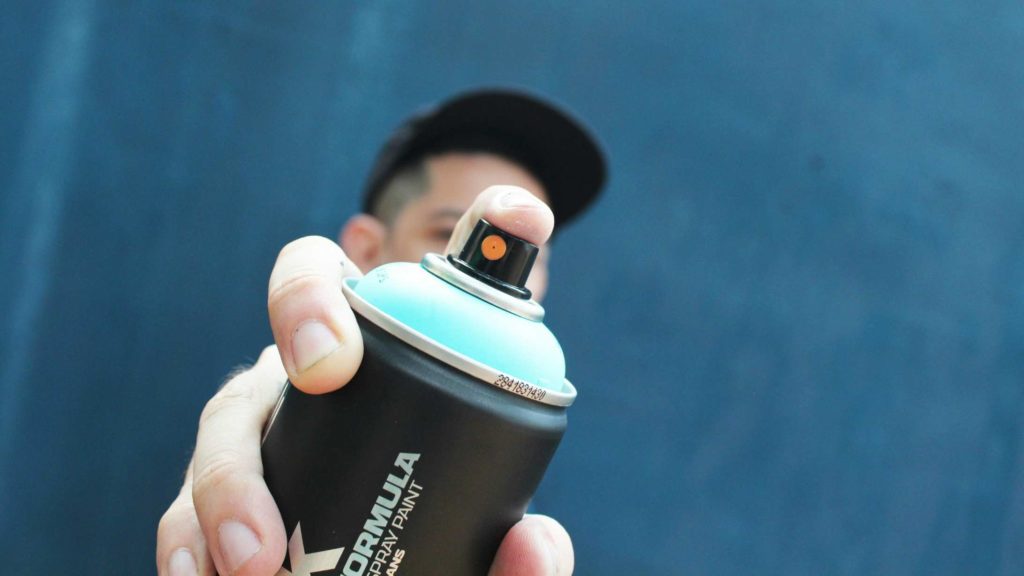
A crucial feature of the current regulatory framework is the use of the UKCA marking. Introduced after the UK’s departure from the European Union, this conformity mark serves as the British counterpart to the EU’s CE marking.
Its presence on an aerosol dispenser demonstrates that the product complies with the relevant UK regulations and can be legally placed on the market in Great Britain.
Until 31 December 2027, the UK government has allowed some flexibility: the UKCA marking can be affixed directly to the product, to its label, or even appear in accompanying documentation. After that date, stricter placement rules will apply, requiring the symbol to be printed on the product itself in most cases.
For aerosols, another acceptable symbol is the reversed epsilon (a stylised ‘3’), which has long been used as a conformity indicator in Europe. Products bearing this symbol continue to be accepted in Great Britain until the end of the transitional period.
It is important to highlight that the UKCA marking is valid exclusively within Great Britain. It does not grant automatic access to the European Union market. Exporters therefore need to be mindful of the dual requirements: CE or reversed epsilon marking for the EU, and UKCA marking for Great Britain.
This dual system reflects the regulatory divergence following Brexit and underscores the importance of careful compliance planning for businesses operating internationally.
Special Rules for Northern Ireland
The regulatory environment in Northern Ireland operates under the Windsor Framework, which establishes a distinct arrangement compared to Great Britain. In this territory, aerosol dispensers must continue to use the reversed epsilon marking to demonstrate compliance with EU-derived requirements.
In some cases, the UK(NI) marking may also be applied when UK conformity assessment bodies are involved. Products that meet the Northern Ireland requirements enjoy unfettered access to the Great Britain market, ensuring smoother trade within the UK while preserving alignment with EU law where necessary.
Conclusion
The Aerosol Dispensers Regulations 2009 establish a comprehensive framework to ensure the safety and compliance of aerosol products in Great Britain.
From strict capacity limits and testing requirements to clear labelling rules under the GB CLP Regulation, these measures are designed to protect consumers and workers while supporting fair trade.
The introduction of the UKCA marking has added a new dimension to compliance, reflecting the UK’s regulatory independence after Brexit.
Businesses that adapt to these requirements and remain vigilant about the differences between GB and EU frameworks will be best positioned to maintain market access and consumer trust.
Key takeaways: Aerosol Compliance in Great Britain
- Aerosol dispensers in Great Britain are regulated under the Aerosol Dispensers Regulations 2009
- Strict limits apply to container capacity, filling ratios, pressure resistance, and structural integrity
- Labelling must comply with the GB CLP Regulation, including hazard pictograms and precautionary statements
- Mandatory testing is required to demonstrate resistance to pressure, using approved methods
- The UKCA marking confirms compliance for the GB market but is not valid in the EU
- Transitional arrangements apply until 31 December 2027, after which stricter UKCA placement rules will apply
- Northern Ireland follows a separate regime under the Windsor Framework
Contact us, and we will be happy to help you to keep your product compliant with all relevant markets of destination!